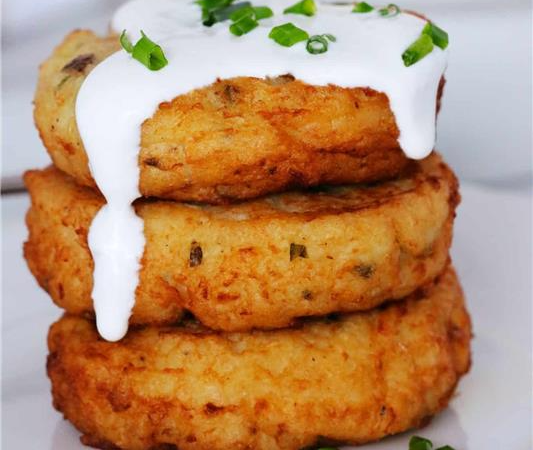
Friendly Fried Mashed Potato Cakes
Introduction
Friendly Fried Mashed Potato Cakes are a simple, tasty, and comforting way to turn leftover mashed potatoes into something everyone can enjoy.
These little potato cakes are soft and warm in the middle, while the outside becomes golden and lightly crisp when fried.
The recipe uses simple ingredients that are often already sitting in your kitchen.
Mashed potatoes are mixed with egg, flour, cheese, herbs, and a little seasoning to make a soft mixture.
The mixture is then shaped into small cakes and cooked until the outside is beautifully golden.
Each bite gives you a lovely mix of creamy potato, melted cheese, and a gentle crisp texture.
This is an easy recipe for beginners because there are no complicated cooking skills needed.
It is also a useful recipe when you have leftover potatoes after a family meal.
If you are searching for an easy mashed potato cakes recipe, leftover mashed potato recipe, crispy potato cakes, or a simple comfort food idea, these friendly potato cakes are a great choice.
People love mashed potato cakes because they are warm, filling, and familiar.
Potatoes have a comforting taste that works well with many different flavors.
When mashed potatoes are combined with cheese and herbs, they become even more enjoyable.
The outside gets golden in the pan while the inside stays soft and creamy.
This difference in texture makes every bite more interesting.
You can serve the cakes for breakfast, lunch, dinner, or as an afternoon snack.
They are also a great way to use food that might otherwise be thrown away.
Instead of letting leftover mashed potatoes sit in the refrigerator until they are forgotten, you can give them a fresh and exciting purpose.
The recipe is flexible too, so you can add vegetables, cooked meat, green onions, or different kinds of cheese depending on what you have available.
These potato cakes are especially useful after a holiday meal, family dinner, or weekend gathering when you have extra mashed potatoes.
They can turn yesterday’s side dish into today’s main attraction.
You can also prepare them when you want something quick and cozy without making a complicated meal.
Serve them with a fresh salad for a simple lunch, or add eggs and fruit for a hearty breakfast.
For dinner, they can be served beside roasted vegetables, chicken, fish, or beans.
If you are looking for a comforting meal on a cold day, these warm potato cakes can make the kitchen feel extra welcoming.
They are also useful for families because each person can enjoy a small cake with their favorite topping or sauce.
For people who enjoy homemade food but have limited time, this recipe offers a simple way to create something satisfying from ingredients that are already available.
The result is a dish that feels both practical and special.
There is also something cheerful about serving a plate of golden potato cakes to family and friends.
Their small round shape makes them easy to share and fun to eat.
You can place them on a serving plate with yogurt sauce, sour cream, fresh herbs, or a simple tomato dip.
Children may enjoy them because they are crispy on the outside and soft inside.
Adults can enjoy them with stronger flavors such as garlic, herbs, chili, or sharp cheese.
You can make the cakes small for snacks or slightly larger for a filling meal.
If you are trying to include more vegetables in your meals, finely chopped spinach, carrots, peas, or corn can be mixed into the potato mixture.
While fried potato cakes are still a comfort food and should be enjoyed as part of a varied diet, they can fit into many different meal styles.
Once you make them, you may find yourself saving leftover mashed potatoes on purpose just so you can make another batch.
Ingredients You Will Need
This recipe makes about 10 to 12 mashed potato cakes.
Main Ingredients
• 3 cups cold mashed potatoes
• 1 large egg
• 1 half cup all purpose flour
• 1 half cup shredded cheddar cheese
• 2 tablespoons finely chopped green onions
• 1 tablespoon chopped fresh parsley
• 1 half teaspoon garlic powder
• 1 half teaspoon salt
• 1 fourth teaspoon black pepper
• 2 tablespoons grated Parmesan cheese
• 3 tablespoons cooking oil for frying
Optional Ingredients
• 1 fourth teaspoon paprika
• 1 fourth teaspoon dried thyme
• 1 fourth cup cooked peas
• 1 fourth cup cooked sweet corn
• 2 tablespoons finely chopped cooked spinach
• 2 tablespoons finely chopped cooked bacon
• 1 small green chili, finely chopped
• 1 tablespoon finely chopped fresh chives
For Serving
• 1 half cup plain yogurt or sour cream
• 1 tablespoon chopped fresh parsley
• 1 tablespoon chopped green onions
• 1 tablespoon lemon juice
• Your favorite tomato or chili sauce
For the best texture, use cold mashed potatoes that are fairly thick.
Very loose mashed potatoes can make the mixture difficult to shape.
If your mashed potatoes contain a lot of milk or butter, you may need a little extra flour.
Step by Step Method
Step 1: Prepare the Mashed Potatoes
Start with cold mashed potatoes.
If you have leftover mashed potatoes from the previous day, take them from the refrigerator and place them in a large bowl.
Break up any large pieces with a fork.
You want the potatoes to be fairly smooth so the cakes hold together well.
If your potatoes contain large chunks, mash them gently before continuing.
Do not add extra milk or water at this stage.
The mixture needs to be firm enough to shape.
If the mashed potatoes are very soft, you can add a little more flour later.
Once the potatoes are ready, move on to the other ingredients.
Step 2: Add the Egg
Crack one large egg into the bowl with the mashed potatoes.
The egg helps hold the mixture together.
It also adds moisture and helps the outside of the cakes become golden during cooking.
Use a fork or spoon to mix the egg into the potatoes.
You do not need to beat the egg separately.
Just make sure it becomes evenly mixed through the potatoes.
The mixture may become a little softer after adding the egg.
That is normal.
The flour and cheese will help give the mixture more structure.
Step 3: Add Flour and Cheese
Add the flour and shredded cheddar cheese to the bowl.
The flour helps the cakes hold their shape while cooking.
The cheese adds a creamy texture and a savory flavor.
Add the Parmesan cheese as well.
Stir gently until the ingredients are spread through the potatoes.
Do not worry if the mixture looks slightly rough.
The goal is to create a mixture that is firm enough to shape with your hands.
If the mixture feels too wet, add one extra tablespoon of flour at a time.
Avoid adding too much flour because it can make the potato cakes heavy.
Step 4: Add Herbs and Seasoning
Add the chopped green onions and parsley.
Then add garlic powder, salt, black pepper, and paprika if you are using it.
You can also add dried thyme or fresh chives.
Stir everything together gently.
Taste a very small amount of the mixture if the potatoes were not previously seasoned.
Adjust the salt and pepper if needed.
Remember that cheese can already contain salt, so add extra salt carefully.
The mixture should smell savory and fresh from the herbs.
Once everything is combined, it is ready for shaping.
Step 5: Add Optional Vegetables
If you want to add vegetables, make sure they are cooked and fairly dry.
Peas, corn, spinach, and finely chopped carrots can all work well.
Avoid adding vegetables that contain a lot of water because extra moisture can make the cakes fall apart.
If you use spinach, squeeze out excess water before chopping it.
If you use corn or peas, drain them well.
Add only a small amount at first.
Stir gently so the vegetables are spread evenly.
This is an easy way to add more color and variety to the recipe.
The potato should still remain the main ingredient.
Step 6: Chill the Mixture
Cover the bowl and place it in the refrigerator for about 20 to 30 minutes.
This step is helpful because chilled potato mixture is easier to shape.
It also gives the flour time to absorb some moisture.
If your mixture already feels very firm, you can shape the cakes without a long chill.
However, chilling usually makes the process easier for beginners.
While the mixture chills, prepare your cooking area.
Place a clean plate nearby for the shaped cakes.
You can also prepare your serving sauce at this time.
Once the mixture feels firm, you are ready to shape it.
Step 7: Shape the Potato Cakes
Take a small portion of the potato mixture using your hands or a spoon.
Roll it gently into a ball.
Place it on a clean surface and press it down carefully to make a small round cake.
The cake should be about 1 centimeter thick.
Try to keep the thickness similar for all the cakes.
If some are very thick and others are very thin, they may cook at different speeds.
If the mixture sticks to your hands, lightly wet your hands or dust them with a little flour.
Do not use too much flour.
Repeat until you have used all the mixture.
Step 8: Check the Shape
Look at each potato cake before frying.
The edges should look fairly smooth and the cakes should not have large cracks.
Small cracks are not a problem.
If a cake is falling apart, gently press it together.
You can also mix a little more flour into the remaining mixture if it seems too soft.
Try not to make the cakes too large because smaller cakes are easier to flip.
A cake that is about the size of your palm works well.
Place the finished cakes on a clean plate.
Keep them ready while you heat the pan.
Step 9: Heat the Pan
Place a large nonstick or heavy pan over medium heat.
Add the cooking oil and allow it to heat for a short time.
The oil should be hot enough to help the potato cakes become golden.
It should not be smoking.
If the oil begins to smoke, reduce the heat and wait a moment.
A medium heat is usually easier for beginners because it gives the cakes time to cook inside while the outside becomes crisp.
Do not overcrowd the pan.
Leaving space around each cake makes flipping easier.
You may need to cook the cakes in two or three batches.
Step 10: Place the Cakes in the Pan
Carefully place the potato cakes into the hot pan.
Leave a little space between them.
You should hear a gentle sizzling sound when they touch the pan.
If there is no sound, the pan may not be hot enough.
If the oil splashes or the cakes brown very quickly, the heat may be too high.
Allow the first side to cook without moving the cakes too much.
Moving them too early can cause them to break.
Let the bottom develop a golden crust.
This usually takes about 3 to 5 minutes.
Step 11: Flip Carefully
Once the first side is golden, use a wide spatula to flip each cake.
Slide the spatula fully underneath the cake before lifting it.
Turn it gently and place it back into the pan.
Do not press down hard after flipping.
Pressing can squeeze out the soft center.
Cook the second side for another 3 to 5 minutes.
The outside should become golden and crisp.
The center should be hot and soft.
If the cakes brown too quickly, lower the heat slightly.
Step 12: Cook the Remaining Cakes
Remove the finished cakes and place them on a plate lined with paper towels if desired.
This can help absorb some excess oil.
Add a little more oil to the pan if needed before cooking the next batch.
Continue until all the potato cakes are cooked.
Keep an eye on the pan temperature between batches.
A pan that becomes too hot can burn the outside before the inside is warm.
A pan that is too cool can make the cakes absorb more oil.
Medium heat is usually the best starting point.
Take your time and avoid rushing the process.
Step 13: Make a Simple Yogurt Sauce
While the cakes are warm, you can prepare a simple sauce.
Place plain yogurt or sour cream in a small bowl.
Add lemon juice, chopped parsley, and a little black pepper.
Mix everything together.
Taste and add a small amount of salt if needed.
The cool and slightly tangy sauce works beautifully with warm potato cakes.
You can also add garlic if you enjoy a stronger flavor.
A tomato sauce or chili sauce can be used instead.
Choose the sauce that best matches your meal.
Step 14: Serve the Potato Cakes
Arrange the golden potato cakes on a serving plate.
Add fresh parsley or green onions on top.
Place the yogurt sauce in a small bowl beside them.
You can serve the cakes while they are hot and crisp.
They are especially good when the outside is freshly cooked.
For breakfast, serve them with eggs and fruit.
For lunch, add a fresh salad and yogurt sauce.
For dinner, serve them beside roasted vegetables or a protein of your choice.
For a snack, serve smaller cakes with a dipping sauce.
Step 15: Store Leftovers
If you have leftover cooked potato cakes, allow them to cool before storing them.
Place them in an airtight container and refrigerate them.
Use them within a few days for the best quality.
When you want to eat them again, reheat them in a pan or oven.
A pan can help bring back some of the crisp texture.
You can also use an air fryer if you have one.
Avoid heating them for too long because the center can become dry.
If you freeze them, place sheets of baking paper between the cakes so they do not stick together.
Reheat them until they are hot throughout.
Why This Recipe Is Special
Friendly Fried Mashed Potato Cakes are special because they give leftover potatoes a completely new personality.
Mashed potatoes are often served as a side dish, but these cakes can become the star of the meal.
The outside becomes golden and crisp while the center stays soft and creamy.
Cheese gives the cakes a savory taste that works well with the mild flavor of potatoes.
Fresh herbs add color and a fresh smell.
This recipe is also flexible.
You can keep it simple with potatoes, egg, flour, cheese, and herbs.
Or you can add vegetables and other ingredients to create a different version.
This means the recipe can change based on what you have in your refrigerator.
Potatoes provide carbohydrates, which are an important source of energy.
They also provide nutrients such as potassium and vitamin C.
Eggs provide protein, while cheese adds protein and calcium.
Fresh herbs can add small amounts of vitamins and plant compounds.
The exact nutrition depends on the ingredients and portion size.
Because the cakes are fried in oil, they are richer than plain boiled potatoes.
If you want a lighter cooking method, you can bake the cakes or cook them in an air fryer.
The texture will be different, but they can still become golden and enjoyable.
One of the best things about this recipe is its ability to reduce food waste.
Leftover food can often become a new meal with a little creativity.
Instead of throwing away extra mashed potatoes, you can turn them into a dish that feels completely different.
This makes the recipe practical for families and home cooks.
The cakes are also easy to make ahead.
You can prepare and shape the mixture before cooking.
Keep the uncooked cakes covered in the refrigerator for a short time and cook them when needed.
This can make meal preparation easier on busy days.
Extra Tips for Better Taste
Use Cold Mashed Potatoes
Cold mashed potatoes are usually easier to shape than hot potatoes.
They also help the mixture stay firm while you form the cakes.
Keep the Potatoes Thick
Very soft mashed potatoes can make the cakes difficult to handle.
If your potatoes are loose, add flour gradually until the mixture becomes firm enough to shape.
Use Sharp Cheese
A stronger cheese can add more flavor without needing a large amount.
Cheddar is a simple choice, but you can also experiment with other cheeses.
Add Fresh Herbs
Parsley, chives, green onions, and thyme can make the cakes taste fresher.
Fresh herbs also give the cakes a lovely color.
Try Garlic
Garlic powder is easy to mix into the potato mixture.
Fresh roasted garlic can create a softer and sweeter garlic flavor.
Add Paprika
A little paprika can add warmth and a beautiful color.
Use more if you enjoy a stronger flavor.
Add Chili
For a spicy version, add a small amount of finely chopped green chili.
You can also serve the finished cakes with chili sauce.
Add Vegetables
Corn, peas, carrots, and spinach can add color and variety.
Make sure the vegetables are not too wet before adding them.
Add Cooked Meat
Small pieces of cooked bacon, chicken, or another cooked meat can make the cakes more filling.
Make sure the meat is fully cooked before adding it.
Use a Good Pan
A nonstick or heavy pan can make flipping easier.
It can also help the cakes brown more evenly.
Do Not Use Too Much Oil
The cakes need enough oil to brown, but they do not need to be swimming in oil.
A moderate amount can give you a golden surface while keeping the dish manageable.
Do Not Flip Too Soon
The potato mixture needs time to form a crust.
If you flip the cake before the bottom becomes firm, it may break.
Use a Wide Spatula
A wide spatula gives the cake more support when you turn it.
This is especially helpful when the mixture is soft.
Keep the Heat Medium
High heat can burn the outside while leaving the center cool.
Medium heat gives the cakes more time to become hot and crisp.
Add a Crispy Topping
You can coat the outside lightly with breadcrumbs before frying.
This creates an extra crisp texture.
Try Parmesan
A little Parmesan can give the cakes a deeper savory flavor.
It also helps the outside become nicely golden.
Serve With Something Fresh
A fresh salad, cucumber, tomatoes, or herbs can balance the rich potato cakes.
A cool yogurt sauce also works very well.
Make Small Cakes
Smaller cakes are easier to flip and can be excellent for parties or snacks.
They also cook a little faster.
Do Not Overwork the Mixture
Mix the ingredients until they come together.
Too much mixing can make the cakes heavy.
Taste Before Shaping
If your mashed potatoes were already heavily seasoned, you may need less salt.
Always consider the salt already present in cheese and leftover potatoes.
Make a Breakfast Version
Add green onions, cheese, and herbs, then serve the cakes with eggs.
This makes a comforting breakfast that feels special without requiring complicated cooking.
Make a Dinner Version
Add vegetables and serve the cakes with a large salad and a protein rich food.
This creates a more complete meal.
Make a Snack Version
Shape the mixture into very small cakes.
Serve them with yogurt, tomato sauce, or a mild chili dip.
Frequently Asked Questions
What are mashed potato cakes?
Mashed potato cakes are small cakes made by combining mashed potatoes with ingredients such as egg, flour, cheese, and seasoning.
They are shaped and cooked until the outside becomes golden.
Can I use leftover mashed potatoes?
Yes.
Leftover mashed potatoes are perfect for this recipe.
Cold potatoes are often easier to shape.
Why are my potato cakes falling apart?
The mixture may be too wet or may not have enough binding ingredients.
Add a little flour and chill the mixture before shaping.
Why are my potato cakes too dry?
You may have added too much flour or cooked the cakes for too long.
Add flour gradually and remove the cakes once they are golden and hot.
Can I bake potato cakes instead of frying them?
Yes.
Place them on a lightly greased baking sheet and bake until golden, turning them carefully during cooking.
The texture may be less rich than pan fried cakes.
Can I use an air fryer?
Yes.
Lightly brush the cakes with oil and cook them in an air fryer until golden and crisp.
The exact time depends on the air fryer and the thickness of the cakes.
Can I make these without cheese?
Yes.
You can leave out the cheese and increase the herbs and seasoning.
The texture may change slightly.
Can I use gluten free flour?
Yes.
A suitable gluten free flour blend can be used.
Different blends absorb moisture differently, so add it gradually.
Can I add vegetables?
Yes.
Peas, corn, spinach, and finely chopped cooked carrots can work well.
Keep the vegetables fairly dry.
Can I freeze mashed potato cakes?
Yes.
You can freeze shaped cakes before cooking or freeze cooked cakes after they have cooled.
Use suitable freezer storage and separate individual cakes with baking paper.
How do I make them extra crispy?
You can add a light coating of breadcrumbs before frying.
Cooking over medium heat with enough oil can also help create a golden crust.
What sauce goes with potato cakes?
Yogurt sauce, sour cream, tomato sauce, chili sauce, garlic sauce, and herb sauces can all work well.
Choose based on your taste.
Can children eat these potato cakes?
Many children enjoy soft potato cakes because they have a familiar flavor and simple texture.
For young children, keep the cakes soft enough to chew safely and avoid very spicy ingredients.
Can I use sweet potatoes?
Yes.
Sweet potatoes can be used for a different version.
They have a naturally sweet flavor, so savory herbs and spices can balance them nicely.
Can I make them ahead?
Yes.
You can prepare the mixture and shape the cakes ahead of cooking.
Keep them covered and refrigerated until you are ready to cook them.
Why are my cakes brown outside but cold inside?
The pan may be too hot.
Lower the heat and cook the cakes more slowly so the center has time to warm.
Final Thoughts
Friendly Fried Mashed Potato Cakes are proof that simple ingredients can become something wonderfully comforting with just a little creativity.
They are crispy on the outside, soft in the center, and full of familiar flavors from potatoes, cheese, herbs, and seasoning.
The recipe is especially useful when you have leftover mashed potatoes that need a new purpose.
You can keep the cakes simple or make them more exciting with vegetables, herbs, garlic, chili, or cooked meat.
They work for breakfast, lunch, dinner, snacks, family meals, and casual gatherings.
The best part is that you do not need advanced cooking skills to make them.
Take your time when shaping the cakes, use medium heat, and wait for a golden crust before flipping.
Serve them with a cool yogurt sauce or your favorite dip, and add fresh vegetables for a balanced meal.
Once you see how easy and tasty these potato cakes are, you may never look at leftover mashed potatoes in quite the same way again.
Nutrition Details
The following nutrition information is an estimate for one potato cake when the recipe makes 12 cakes.
The exact values can change depending on the type of mashed potatoes, cheese, flour, oil, and other ingredients used.
Optional ingredients will also change the final nutrition.
| Nutrition Item | Approximate Amount Per Serving |
|---|---|
| Calories | 145 |
| Protein | 4 grams |
| Carbohydrates | 17 grams |
| Dietary Fiber | 1 gram |
| Total Fat | 7 grams |
| Saturated Fat | 3 grams |
| Sugar | 1 gram |
| Sodium | 260 milligrams |
| Calcium | 75 milligrams |
| Iron | 1 gram |
| Potassium | 260 milligrams |
| Vitamin C | 7 milligrams |
Nutrition Notes
Potatoes provide carbohydrates and several nutrients, including potassium and vitamin C.
Eggs and cheese provide protein, while cheese also contributes calcium.
Fresh herbs and vegetables can add additional vitamins and minerals.
Because these cakes are cooked with oil and contain cheese, their calorie and fat content can be higher than plain mashed potatoes.
Using less oil or choosing baking or air frying can change the final nutrition profile.
Adding vegetables can also increase the fiber and nutrient content of the meal.
For a more balanced meal, serve the potato cakes with vegetables and a protein rich food.
A fresh salad, steamed vegetables, eggs, beans, chicken, or fish can all work well depending on the meal.
The nutrition table is an estimate and should not be treated as an exact measurement.
Disclaimer
This recipe is provided for general food and nutrition information only.
Everyone’s body is different, and individual nutrition needs can vary.
Results may change depending on portion size, ingredients, cooking methods, activity level, and overall eating habits.
This recipe contains common allergens such as eggs, milk, and wheat.
People with food allergies, food intolerances, or special dietary needs should check all ingredient labels carefully.
If you have a medical condition or follow a special diet, speak with a qualified health professional about your individual food choices.
The nutrition information provided is an estimate and should not be considered medical advice.