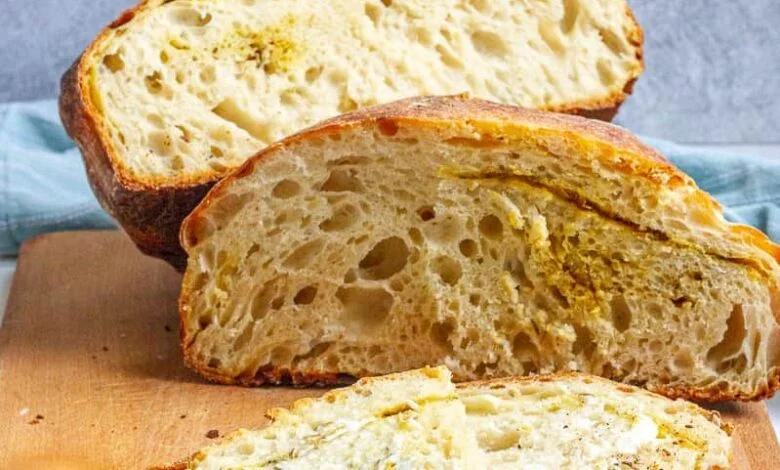
Garlic herb sourdough bread is a wonderful artisanal baking recipe that takes traditional wild yeast bread and elevates it with rich savory aromatics and fragrant herbs. This recipe blends a active sourdough starter with high quality flour, fresh garlic, and aromatic green herbs to create a loaf with a crispy golden crust and a soft airy interior. Unlike basic white loaves, this artisanal creation undergoes a gentle slow fermentation process that develops complex earthy flavors while breaking down hard to digest starches. As the bread bakes in a hot oven, the roasted garlic turns sweet and mellow, filling every slice with rich pockets of flavor that melt into the chewy crumb. The earthy fragrance of dried rosemary, thyme, and parsley weaves through the dough, creating an amazing sensory balance between natural wild yeast tang and garlic richness. Every single slice offers a rewarding crunch on the outside followed by a soft, cloud like texture inside that keeps you coming back for another piece.
People absolutely love this recipe because it delivers the luxurious quality of a fancy Italian bakery right into the comfort of your home kitchen without requiring artificial additives. The combination of wild sourdough starter and aromatic herbs transforms simple sandwich bread into a gourmet center feature for any dinner table spread. Home bakers adore the rewarding hands on process of stretching, folding, and shaping the dough, watching a handful of basic ingredients transform into a majestic golden loaf. The crispy blistered crust crackles beautifully when sliced, revealing an open crumb laced with flecks of green herbs and golden garlic bits that look stunning on camera or on a serving board. It is also an amazingly satisfying recipe because the natural acidity of sourdough preserves the loaf naturally, keeping the crumb soft and flavorful for days without using chemical food preservatives or added sugars.
You should consider making this garlic herb sourdough whenever you want to bring extra warmth, comfort, and amazing aromas into your home during a quiet weekend baking session. The patient, rhythmic process of kneading, folding, and resting dough serves as a wonderful therapeutic activity that helps lower daily stress and encourages mindfulness in the kitchen. It is a fantastic bread to bake when hosting dinner parties with friends, as the intoxicating smell of fresh garlic and baking crust greeting your guests at the front door creates an instant feeling of cozy hospitality. Fitness enthusiasts and mindful eaters also love making this bread because traditional wild sourdough fermentation makes the wheat far gentler on your digestive system than store bought commercial yeast options. Whether you want to slice it thick to accompany a warm bowl of soup or use it as the ultimate base for a grilled cheese sandwich, this loaf brings pure joy to every meal.
From a culinary perspective, mastering this sourdough recipe gives you a versatile foundational skill that you can proudly share with family and friends for years to come. Serving a warm slice of fresh homemade bread spread with cold salted butter is one of the simplest yet most profound food pleasures in the human experience. The complex carbohydrates from long fermented grains give your body a steady source of clean physical fuel without causing the sharp blood sugar spikes often caused by ultra processed white bread. Wrap a fresh loaf in cotton paper or baker parchment as a thoughtful gift for neighbors or loved ones to show genuine care and craftsmanship. By combining simple natural ingredients with traditional fermentation techniques, you create a wholesome staple food that nourishes your body while providing an incredibly rich taste experience that standard commercial loaves simply cannot match.
Ingredients You Will Need
-
Active bubbly sourdough starter fed six hours prior: 0.5 cup (100 grams)
-
Bread flour or unbleached all purpose flour: 3.5 cups (450 grams)
-
Whole wheat flour: 0.5 cup (50 grams)
-
Warm unchlorinated water: 1.5 cups (350 milliliters)
-
Fine sea salt: 2 teaspoons (10 grams)
-
Fresh garlic cloves minced finely or roasted soft: 6 cloves (20 grams)
-
Dried rosemary crushed gently: 1 teaspoon (2 grams)
-
Dried thyme leaves: 1 teaspoon (2 grams)
-
Dried parsley flakes: 1 tablespoon (3 grams)
-
Extra virgin olive oil: 1 tablespoon (15 milliliters)
Step by Step Method
-
Measure your warm unchlorinated water and active bubbly sourdough starter into a large glass mixing bowl, whisking them together until the starter dissolves into a milky liquid.
-
Add your bread flour and whole wheat flour into the bowl with the dissolved starter, stirring with a wooden spoon or dough whisk until a shaggy dough forms with no dry flour remaining.
-
Cover the mixing bowl with a damp kitchen towel and let the shaggy dough rest undisturbed for forty five minutes to complete the autolyse phase, which hydrates the flour proteins.
-
Sprinkle your fine sea salt evenly across the top of the rested dough, adding one tablespoon of warm water over the salt crystals to help them dissolve smoothly.
-
Dimple the salt into the dough with your fingertips and fold the dough over itself repeatedly for two minutes until the salt is fully incorporated and the dough feels smooth.
-
Warm your extra virgin olive oil in a small pan over low heat, add your minced garlic, rosemary, thyme, and parsley, and cook gently for two minutes until fragrant without browning the garlic.
-
Remove the oil, herb, and garlic mixture from the heat completely and allow it to cool down to comfortable room temperature before adding it to your bread dough.
-
Spread your cooled garlic herb mixture across the top of your dough, gently pressing the aromatics into the surface with clean wet hands.
-
Perform your first set of stretch and folds by reaching under one side of the dough, pulling it upward gently without tearing, and folding it back over the center.
-
Rotate your bowl ninety degrees and repeat the stretch and fold action on all four sides of the dough until the herbs and garlic are distributed throughout.
-
Cover the bowl with a damp towel and let it rest for thirty minutes at room temperature before performing your second set of stretch and folds in the same manner.
-
Repeat the stretch and fold process two more times every thirty minutes for a total of four sets over two hours, watching the dough become stronger, smoother, and more elastic.
-
Cover the bowl tightly and leave the dough on your counter for bulk fermentation for four to six hours until it rises by about fifty percent and shows small air bubbles on top.
-
Lightly dust your kitchen work surface with a little flour and gently tip the fermented dough out of the bowl without deflating the delicate gas pockets inside.
-
Shape the dough into a round ball by pulling the edges toward the center, flipping the ball over, and dragging it gently across your counter using your hands to create surface tension.
-
Let the shaped dough ball rest on your counter for twenty minutes, then dust the surface lightly with flour and lift it into a round proofing basket lined with a floured cloth.
-
Cover the proofing basket with a clean plastic bag and place it into your refrigerator for a cold overnight fermentation lasting twelve to sixteen hours to build deep flavor.
-
The next morning, place a heavy Dutch oven pot with its lid on onto the middle rack of your oven and preheat to 450 degrees Fahrenheit (230 degrees Celsius) for one full hour.
-
Carefully turn your cold sourdough loaf out of the proofing basket onto a sheet of parchment paper and score a deep slash across the top crust using a razor blade or sharp knife.
-
Carefully remove the hot Dutch oven from your main oven using thick oven mitts, lift the dough inside using the parchment paper edges, and place the lid tightly on top.
-
Bake the covered bread for twenty minutes at 450 degrees Fahrenheit, then carefully remove the lid to let the steam escape and bake uncovered for another twenty minutes until the crust turns dark golden brown.
-
Lift the baked garlic herb bread out of the pot and place it onto a wire cooling rack to cool completely for at least two hours before slicing with a long serrated bread knife.
Why This Recipe Is Special
This garlic herb sourdough recipe is special because it combines the ancient art of wild fermentation with rich, natural flavorings to create a bread that is both delicious and easier on the stomach. Commercial store bought breads often rely on fast rising synthetic yeast, sugar, and industrial dough conditioners that can leave you feeling bloated or sluggish after eating. Sourdough fermentation uses natural wild yeast and beneficial lactic acid bacteria that slowly break down gluten proteins and phytic acid, making the nutrients in wheat far more bioavailable to your body.
The flavor depth achieved in this loaf is truly remarkable compared to standard quick yeast loaves. The natural lactic acid produced during the long overnight chill gives the crumb a light sour tang that contrasts beautifully with the warm sweet notes of gently cooked garlic and aromatic green herbs. Because the garlic and herbs are folded directly into the dough structure, every bite is infused with savory flavor rather than just having seasonings resting on the outer crust.
Extra Tips for Better Taste
To make your garlic herb sourdough taste even more extraordinary, try roasting whole garlic bulbs wrapped in foil in your oven until the cloves turn soft and buttery before folding them into your dough. Sweet roasted garlic melts completely into the crumb as it bakes, creating pockets of soft, rich caramel garlic flavor without any sharp raw bite. You can also add half a cup of freshly grated parmesan or sharp cheddar cheese along with the herbs for an irresistible garlic cheese sourdough loaf.
Make sure to use unchlorinated water when feeding your starter and mixing your dough, as tap water chemicals like chlorine can slow down or kill beneficial wild yeast microflora. Dust your proofing basket with rice flour instead of standard wheat flour to prevent the wet dough from sticking to the cloth lining when turning it out. Always resist the temptation to cut into your hot loaf straight out of the oven, as slicing warm sourdough compresses the moist interior crumb and makes the bread feel gummy instead of airy and light.
Final Thoughts
Baking a fresh loaf of garlic herb sourdough bread from scratch is one of the most rewarding culinary journeys you can take in your home kitchen. From feeding your wild starter to listening to the crispy crust crackle as it cools on your rack, every step offers a chance to create something wholesome, beautiful, and deeply comforting. Slice up your fresh loaf, spread it with rich creamy butter, and share the comforting magic of traditional artisanal baking with the people you love.
Nutrition Details
The following table presents the estimated nutritional values for a single slice of garlic herb sourdough bread, assuming the full baked loaf is sliced evenly into twelve equal portions.
| Nutritional Component | Value Per Serving | | Calories | 165 kcal | | Total Fat | 2.2 grams | | Saturated Fat | 0.3 grams | | Trans Fat | 0 grams | | Cholesterol | 0 milligrams | | Sodium | 320 milligrams | | Total Carbohydrates | 31 grams | | Dietary Fiber | 2 grams | | Total Sugars | 0.5 grams | | Protein | 5.5 grams |
Disclaimer
Everyone’s body is uniquely different and individual health responses or digestive results may vary based on your personal metabolism, gut health, and daily eating habits. The nutritional numbers listed above are standard estimations provided for general informational purposes only and can change depending on the specific flour brands or ingredient choices you make in your kitchen. If you have celiac disease, severe gluten sensitivities, or special dietary requirements, please consult with a qualified healthcare professional or registered dietitian before introducing sourdough products into your daily routine.